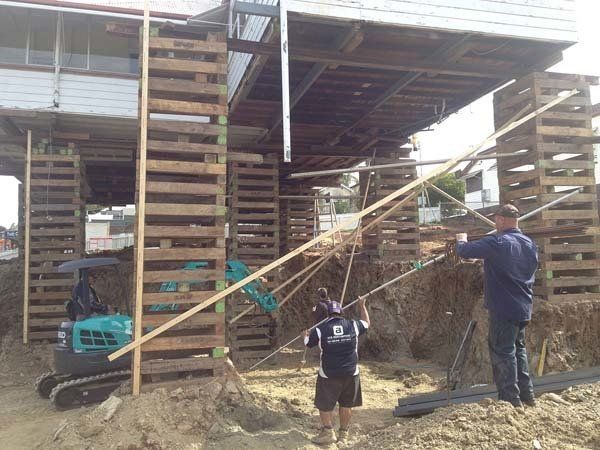
Low-set Nundah post-war home raised onto new steel footings above flood height

House Raising Nundah

House Raising in Nundah — Lift a Low-Set Home Above the Brook

Flood report, engineering, DA, lift, new steel footings and re-levelling — end to end

If your Nundah home sits close to the ground on tired timber stumps, house raising in Nundah fixes two problems in one job: a subfloor too low to use, and water that gets in when the Kedron Brook catchment fills. Lifting to legal height gives you a genuine lower level and puts your floor above the water rather than trying to keep it out. Ace Restumping is fully insured and accredited, works from Eagle Farm just down Sandgate Road, and handles house raising in Nundah end to end — flood report, engineering, Development Application, lift, new steel footings and re-levelling.

Nundah is one of Brisbane's oldest settled districts, but its housing profile was set much later. The suburb expanded heavily through the post-war building boom, when Brisbane's northern suburbs filled quickly with modest, low-set timber and fibro homes on small stumps. Those houses are now well past the point where original stumps can be relied on, which is why so much house raising in Nundah begins as a restumping enquiry.

Local conditions

Why it matters here

Nundah grew fastest in the post-war years, and the housing shows it. Alongside the older Queenslanders sit street after street of low-set timber and fibro homes, built quickly and close to the ground on stumps that were never meant to last eighty years. Owners call about house raising in Nundah when the floors start to slope, when the subfloor is too low for anything but a laundry, or after water comes through following heavy rain across the catchment.

Parts of Nundah fall toward Kedron Brook, and the catchment has been the subject of Council flood study work, with flood mapping across Brisbane reviewed and updated in recent years. Low-lying pockets of the suburb behave very differently in heavy rain from the higher ground closer to the station, and the difference can be a matter of a few streets.

On a flood-affected site, the single most important number in the project is the height you lift to — and it is not a matter of preference. Brisbane City Council publishes a property-specific FloodWise Property Report for every address, showing the defined flood levels that apply to your site. We obtain and work from that report, set the target floor height against the defined level plus the required freeboard, then check it against what the planning controls actually permit on your block.

A house sitting under a metre off the ground has poor subfloor ventilation, and in a damp low-lying pocket that means bearers and joists we regularly find with rot or termite damage on inspection. Water entering through the subfloor damages services and insulation even when it never reaches the floorboards. And a low floor level leaves you with a footprint you can't expand without building outwards into a small block.

On site here

Common local challenges

The challenge

The lift height must come from your own flood report, not a suburb-wide figure

Flood behaviour varies street by street across the Kedron Brook catchment, and Council's flood study work has reviewed and updated mapping across Brisbane in recent years.

A suburb-wide number isn't good enough to build to — get the height wrong and you've spent the money without buying the protection.

We obtain your property's FloodWise Property Report before quoting, set the design height from the defined flood level plus freeboard, and check it against what the planning controls permit on your block.

The challenge

Original stumps on post-war and fibro homes are well past their working life

Nundah's post-war timber and fibro homes were built quickly on stumps that were never meant to last eighty years.

Failed stumps cause sloping floors, doors that won't close and cracked cornices, and they undermine any lift built on top of them.

We replace failed timber stumps with engineered steel or concrete and re-level the floor plate as standard, whether or not a raise is also happening.

The challenge

A low subfloor has poor ventilation and hidden water damage

A house sitting under a metre off the ground has poor subfloor ventilation, and in a damp, low-lying pocket that means bearers and joists commonly show rot or termite damage.

Water entering through the subfloor damages services and insulation even when it never reaches the floorboards, and the damage compounds silently over years.

We inspect the subfloor physically to find damage that photographs never show, and raising the house permanently fixes the ventilation problem that caused much of it.

The challenge

Sheet-clad post-war homes need extra bracing during a lift

Many Nundah homes are lighter timber-framed post-war and fibro construction with sheet cladding that wasn't designed to be moved.

Cladding and wall frames can be damaged during a lift if the bracing isn't planned for the specific construction type.

We assess bearers, joists and wall frames at inspection and brace sheet cladding appropriately during the synchronised jacking lift.

The challenge

The challenge

Our services

What we offer

House Raising

Lifting your home to an approved height and building in below.

For Nundah owners this is the direct answer to a low-set house that's outgrown the family or takes water in heavy rain. You get legal-height living space underneath and a floor level set against your property's defined flood level.

See house raising

House Restumping

Replacing original timber stumps with engineered steel or concrete.

This is the most common enquiry we get from Nundah — post-war homes on their first set of stumps, showing sloping floors, doors that won't close and cracked cornices. Re-levelling is included, so the sag is corrected as part of the job.

See house restumping

House Reblocking

Re-supporting and re-levelling a home where footings have moved unevenly.

Common in Nundah where reactive soils and poor subfloor drainage have dropped one section of the house. We stabilise and correct the affected bays without the cost and disruption of lifting the whole structure.

See house reblocking

House Lifting

The engineered lift: synchronised jacking on a measured grid.

On lighter post-war and fibro homes the lift is comparatively straightforward — the care goes into bracing wall frames and sheet cladding that were never designed to be moved.

See house lifting

House Sliding

Moving a house horizontally on its own block.

On Nundah sites this is often used to shift a dwelling clear of the lowest, wettest corner of the property, or to reposition it for better drainage and access. Frequently combined with a raise under a single approval.

See house sliding

Steel Posts & Beams

Engineered steel supports, specified by our structural engineer.

Where a home sits low in the catchment, steel is the sensible replacement for timber below the floor line — it carries the clear spans a usable lower level needs and doesn't degrade the way hardwood does in a damp subfloor.

See steel posts & beams
Trust & credentials

Fully insured, accredited, on the tools

Ace Restumping is fully insured and accredited for structural raising work. We obtain your property's FloodWise Property Report as part of the assessment, deliver an engineer-certified design with synchronised jacking and engineered footings, provide a documented finished floor level at completion, and manage the DA, engineering and certifier for you — including how a flood overlay changes the way the application is assessed.

Good to know

Frequently asked questions

My Nundah house is low-set fibro, not a Queenslander. Can it still be raised?

Usually, yes. What determines whether a house can be lifted is the framing and floor structure, not the cladding. Timber-framed post-war homes are raised routinely across Nundah. Sheet cladding needs additional bracing during the lift, which we allow for. We assess the bearers, joists and wall frames at inspection and will tell you plainly if a particular house isn't a good candidate.

How high should I lift if my property is flood-affected?

To your property's defined flood level plus the required freeboard, provided the planning controls for your site permit that height. Those figures come from your Council FloodWise Property Report, which we obtain as part of the assessment. A suburb-wide number isn't good enough to build to — flood behaviour varies street by street across the Kedron Brook catchment.

Will house raising in Nundah fix my sloping floors?

Yes. Re-levelling is part of every lift. The house is set down level on its new engineered footings, so the sag and slope caused by failed timber stumps is corrected as a matter of course. If only part of your home has dropped, reblocking may be the more economical option, and we'll say so at inspection rather than upselling a full raise.

Can we live in the house during the work?

No. Services are disconnected and the structure isn't stable while it's off its footings on jacks. The lift itself is typically a matter of days, but the full project — approvals, preparation, footings, re-levelling and reconnection — runs to weeks. We confirm the vacancy window before we start so you can arrange accommodation.

What affects the cost of a Nundah lift?

Size and weight of the house, lift height, ground and footing conditions, site access on narrower blocks, subfloor damage found on inspection, and whether restumping and steel posts and beams are included. A flood overlay adds to the approval scope. We inspect before quoting and itemise the price so you can see what each element contributes.

What approvals will I need?

A Development Application to Brisbane City Council, certified structural engineering and a building certifier. If your site carries a flood or character overlay, that shapes how the application is assessed and is part of why the design height must be properly evidenced. We prepare, lodge and manage all of it, and keep you updated through Council's assessment.

Get in touch

Want to know what your Nundah property's flood numbers mean for a lift? Get your flood-height assessment or call us direct on 0411 596 245.